
Comparing Seawalls and Other Coastal Protection Structures in South Florida
South Florida waterfront property owners face unique challenges when protecting their shorelines. Between tidal fluctuations along the Intracoastal Waterway, boat wake damage in Palm Beach County canals, and hurricane season storm surge, choosing the right coastal defense system requires local expertise.
Whether you own waterfront property in West Palm Beach, Jupiter, Boca Raton, or anywhere along Florida’s Atlantic coast, understanding the differences between seawalls, revetments, bulkheads, and living shorelines is critical for making a smart long-term investment.
This guide compares each shoreline protection method with insights into cost, effectiveness, maintenance requirements, and South Florida permitting considerations. Professional seawall repair services ensure your investment remains protected for decades.
Seawalls: South Florida’s Preferred Coastal Defense
Seawalls are vertical or near-vertical structures built along shorelines to protect property from waves, storm surge, and erosion. Throughout Palm Beach County, Martin County, and Broward County, seawalls remain the most common choice for waterfront homeowners.
Key Characteristics
Structural Design: Typically constructed from reinforced concrete, vinyl sheet piling, steel, or composite materials. South Florida seawalls often use concrete with rebar reinforcement due to the region’s soil conditions and saltwater exposure. Some installations require tiebacks anchored into the upland soil, while others use deep-driven piles.
Effectiveness: Extremely effective at preventing erosion and flooding in high-energy wave environments. Along the Intracoastal from Jupiter to Miami Beach, seawalls protect properties from constant boat wake action and tidal shifts.
Lifespan: 30 to 50 years with proper maintenance. South Florida’s saltwater environment and humidity can accelerate wear, making regular inspections essential.
Maintenance Requirements: Annual inspections for cracks, weep hole clogs, cap deterioration, or steel corrosion. After hurricanes or tropical storms, immediate inspections should identify undermining, scouring, or structural shifts.
Cost Range: $600 to $2,000+ per linear foot depending on material selection, soil conditions, and accessibility. Properties along narrow canals in Lake Worth or Delray Beach may have higher installation costs due to equipment access limitations.
Aesthetic Options: Modern concrete seawall construction allows for decorative cap designs, integrated planters, and color matching to complement South Florida architecture.
Best Applications in South Florida
Seawalls are ideal for:
- Oceanfront and Intracoastal properties in Palm Beach, Singer Island, and Hillsboro Beach
- High-traffic canal systems in Lighthouse Point, Pompano Beach, and Fort Lauderdale
- Properties exposed to significant boat wake from nearby marinas or channels
- Luxury waterfront estates requiring maximum protection and property value preservation
Seawalls vs. Revetments in South Florida
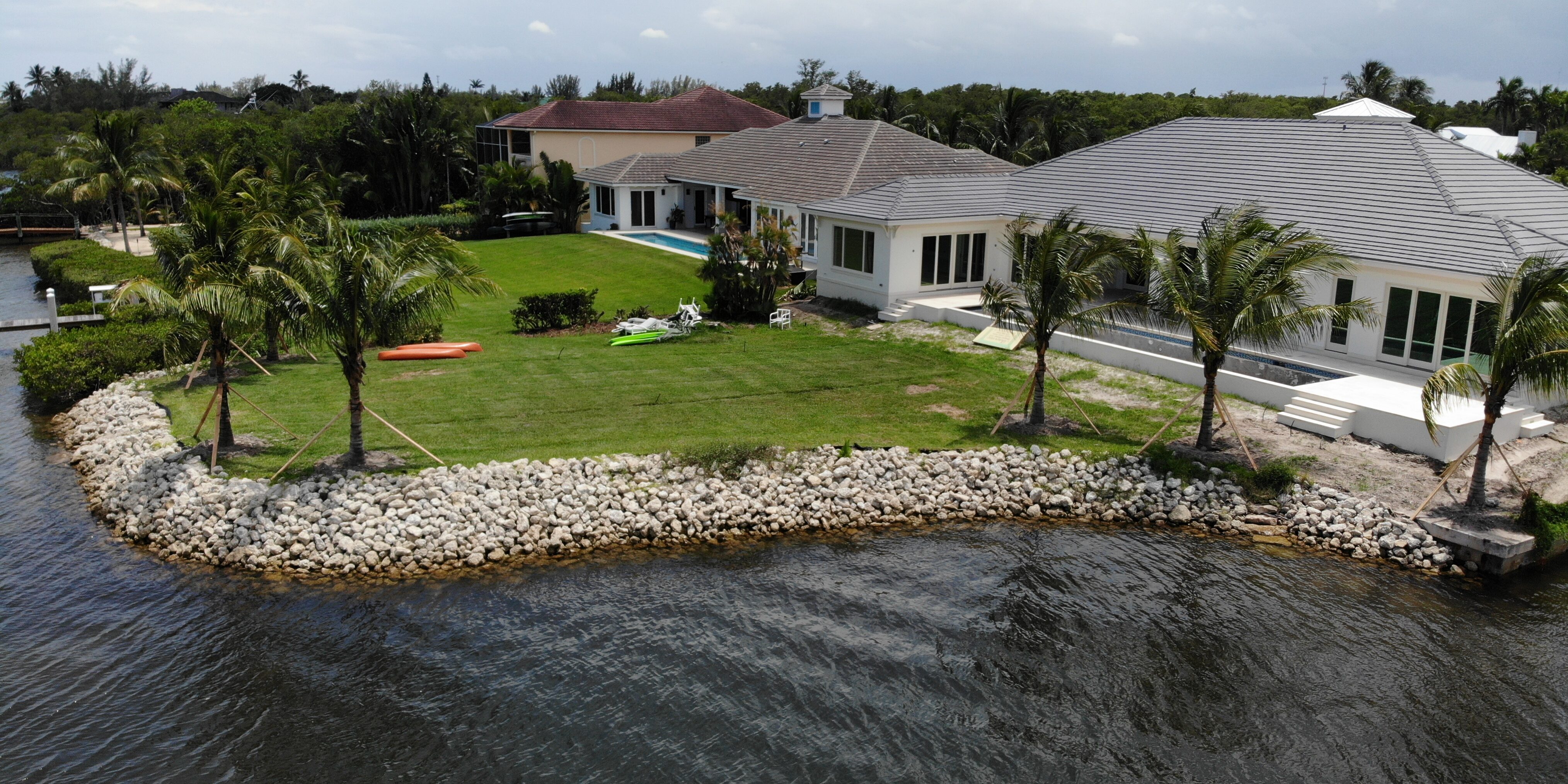
Revetments are sloping structures made of stone, riprap, or interlocking concrete units placed along shorelines to absorb wave energy.
Comparison Overview
| Factor | Seawalls | Revetments |
| Structure | Vertical wall | Sloped, porous surface |
| Cost per linear foot | $600–$2,000+ | $200–$800 |
| Wave energy handling | Reflects waves | Absorbs waves |
| Lifespan | 30–50 years | 20–40 years |
| Environmental impact | Moderate | Lower impact |
| Maintenance | Crack repair, drainage | Stone repositioning |
When Revetments Work in South Florida
Cost Advantage: Revetments typically cost 40–60% less than seawalls, making them attractive for longer shorelines or budget-conscious property owners.
Effectiveness: Highly effective for reducing erosion in moderate wave environments. However, South Florida’s boat traffic and storm exposure often exceed what revetments can handle alone.
Environmental Considerations: Revetments allow water infiltration and create habitat pockets for marine life—a consideration for properties near protected areas like the Lake Worth Lagoon or Loxahatchee River.
Aesthetic Integration: Natural limestone or Florida coral rock blends well with tropical landscapes, though concrete seawall construction remains preferred when durability is the priority.
Best Applications: Properties along quieter sections of the St. Lucie River, smaller lakes in Wellington or Weston, or secondary shorelines with minimal wave exposure.
Seawalls vs. Bulkheads: Understanding the Difference
Many South Florida homeowners use “seawall” and “bulkhead” interchangeably, but they serve different purposes.
Bulkheads are vertical retaining walls designed primarily to hold soil in place. They’re common along canals, marinas, and calmer inland waterways throughout Palm Beach County and Broward County.
Comparison Overview
| Factor | Seawalls | Bulkheads |
| Primary purpose | Wave protection | Soil retention |
| Wave resistance | High | Low to moderate |
| Cost per linear foot | $600–$2,000+ | $300–$1,000 |
| Ideal environment | Ocean, Intracoastal | Canals, lakes, marinas |
| Lifespan | 30–50 years | 20–30 years |
When Bulkheads Are Sufficient
Canal Properties: Many residential canals in Boca Raton, Deerfield Beach, and Coral Springs experience minimal wave action, making bulkheads a cost-effective choice.
Marina Applications: Bulkheads work well for boat slip areas and dock approaches where soil retention matters more than wave deflection.
Limitations: Bulkheads can increase erosion on neighboring properties due to wave reflection. In high-traffic waterways like the canals off Las Olas Boulevard or the Palm Beach Inlet area, seawalls provide superior protection.
Maintenance Concerns: Bulkheads are vulnerable to soil loss behind the wall (called “voids”) and corrosion in saltwater environments. Regular monitoring prevents costly failures.
Seawalls vs. Living Shorelines
Living shorelines use natural materials—marsh grasses, mangroves, oyster shells, and sand—to reduce erosion while supporting coastal ecosystems.
Comparison Overview
| Factor | Seawalls | Living Shorelines |
| Structure | Engineered wall | Natural vegetation/habitat |
| Cost per linear foot | $600–$2,000+ | $50–$200 |
| Wave resistance | High | Low to moderate |
| Environmental benefit | Neutral | Highly beneficial |
| Maintenance | Structural repairs | Replanting, monitoring |
| Lifespan | 30–50 years | Indefinite with care |
Living Shoreline Applications in South Florida
Regulatory Preference: Florida Department of Environmental Protection increasingly encourages living shorelines in certain zones. Properties adjacent to mangrove preserves or marine sanctuaries may face permitting advantages for natural approaches.
Hybrid Solutions: Many South Florida waterfront owners combine living shorelines with engineered structures—for example, a seawall with a planted shelf or riprap toe protection with native vegetation.
Limitations: Living shorelines cannot withstand the wave energy found along the Intracoastal Waterway or oceanfront properties. They work best in protected coves, lagoons, or low-energy canal systems.
Pairing with Other Improvements: Living shorelines integrate beautifully with dock construction projects, creating functional and environmentally responsible waterfronts.
Factors to Consider for South Florida Properties
When choosing between seawalls, revetments, bulkheads, and living shorelines, South Florida property owners should evaluate:
Wave Energy Exposure
- Oceanfront or Intracoastal: Seawall recommended
- High-traffic canals (boat wakes): Seawall or heavy-duty bulkhead
- Quiet canals or lakes: Bulkhead or revetment
- Protected lagoons: Living shoreline or revetment
Soil Conditions South Florida’s sandy soils and high water tables affect foundation requirements. Properties in areas like Palm Beach Gardens or Stuart may require deeper pilings than those in rockier zones near Coral Gables.
Budget and Timeline Seawalls cost more upfront but typically deliver lower lifetime costs due to durability. Bulkheads and revetments require more frequent repairs in saltwater environments.
Property Value Considerations Waterfront properties in Jupiter, Palm Beach, and Fort Lauderdale command premium prices. A properly engineered seawall signals quality construction to buyers and often reduces flood insurance premiums.
Regulatory Requirements South Florida coastal construction requires permits from multiple agencies. Understanding local requirements saves time and prevents costly violations.
South Florida Permitting Requirements
Shoreline construction in Palm Beach County, Broward County, Martin County, and Miami-Dade County requires permits from:
Florida Department of Environmental Protection (FDEP) Oversees environmental impact and coastal construction regulations statewide.
U.S. Army Corps of Engineers Required for work affecting navigable waters, including most Intracoastal and oceanfront projects.
South Florida Water Management District Reviews projects affecting water flow, drainage, and flood control.
County Environmental Resource Management Palm Beach County, Broward County, and Miami-Dade each have local permitting offices with specific requirements.
Municipal Building Departments Cities like West Palm Beach, Boca Raton, Fort Lauderdale, and Miami Beach have additional local permit requirements.
Timeline Expectations: Simple seawall repairs may be permitted within weeks. New seawall construction typically requires 2–6 months for full permitting, depending on project scope and agency workloads.
Coast Seawall handles permitting coordination for projects throughout South Florida, streamlining the approval process for property owners.
Insurance and Property Value Benefits
Installing a seawall or upgrading existing shoreline protection delivers measurable financial benefits for South Florida waterfront owners:
Flood Insurance Savings Properties with engineered seawalls often qualify for lower flood insurance premiums—significant savings in high-risk coastal zones.
Increased Resale Value Buyers in Palm Beach County and Broward County waterfront markets prioritize homes with recently inspected or newly constructed seawalls. A failing seawall is a common deal-breaker in luxury home transactions.
Storm Damage Prevention South Florida’s hurricane exposure makes shoreline protection essential. A properly engineered seawall reduces erosion, property loss, and post-storm repair costs.
Financing Considerations Some lenders require seawall inspections before approving mortgages on waterfront properties. Addressing deficiencies before listing improves sale timelines.
Making the Right Choice for Your South Florida Property
Shoreline protection requires balancing durability, budget, aesthetics, and environmental considerations. Here’s a quick decision guide:
Choose a Seawall If:
- Your property faces the ocean, Intracoastal Waterway, or high-traffic canals
- Maximum long-term protection is the priority
- You want to increase property value and reduce insurance costs
- Hurricane and storm surge protection is essential
Choose a Revetment If:
- Your shoreline has moderate wave exposure
- Natural aesthetics matter more than maximum protection
- Budget constraints require a lower upfront investment
- Environmental sensitivity is a priority
Choose a Bulkhead If:
- Your property sits on a calm canal, lake, or marina
- Soil retention is the primary concern
- Wave action is minimal
- Budget is limited
Choose a Living Shoreline If:
- Your property is in a protected, low-energy zone
- Environmental stewardship is a priority
- Permitting favors natural solutions
- You’re willing to invest in ongoing maintenance
Consider Hybrid Solutions If:
- Your shoreline has varied exposure along its length
- You want environmental benefits with structural protection
- Permitting requires natural elements alongside engineered structures
Conclusion
South Florida’s unique coastal environment demands thoughtful shoreline protection decisions. From the luxury estates of Palm Beach Island to the canal homes of Fort Lauderdale, every waterfront property has specific needs based on wave exposure, soil conditions, and owner priorities.
Seawalls remain the gold standard for high-energy environments, offering 30–50 years of protection when properly maintained. Revetments and bulkheads serve well in calmer settings, while living shorelines provide eco-friendly alternatives for protected zones.
Before investing in any shoreline protection system, consult a licensed marine contractor familiar with South Florida conditions and permitting requirements.
Contact Coast Seawall
Serving Palm Beach County, Broward County, Martin County, and Miami-Dade County
Whether you need a seawall inspection, repair, or new construction, Coast Seawall provides expert guidance for South Florida waterfront property owners.
📞 Call for a Free Consultation 🌐 coastseawall.com
Services:Seawall Repair | Concrete Seawall Construction | Dock Construction | Boat Lifts
FAQs: Seawalls and Shoreline Protection in South Florida
Which lasts longer in South Florida’s saltwater environment—a seawall or revetment?
Seawalls generally last 30–50 years compared to 20–40 years for revetments. South Florida’s saltwater exposure, humidity, and storm frequency make regular maintenance essential for both options.
What’s the most environmentally friendly shoreline protection for Palm Beach County properties?
Living shorelines and revetments provide habitat benefits and reduce environmental impact. However, many Intracoastal and oceanfront properties require engineered seawalls for adequate protection, sometimes combined with natural elements in hybrid designs
Are seawalls worth the higher cost for South Florida canal homes?
For properties on high-traffic canals with significant boat wake exposure, seawalls deliver superior long-term value. Calmer canal systems may be adequately protected by bulkheads at lower cost.
Can I combine seawalls with natural shoreline elements?
Yes. Many South Florida property owners install seawalls with planted shelves, riprap toe protection, or mangrove buffers. These hybrid solutions balance structural protection with environmental benefits.
What permits do I need for seawall construction in West Palm Beach?
Most projects require permits from Florida DEP, the U.S. Army Corps of Engineers, South Florida Water Management District, Palm Beach County Environmental Resources Management, and the City of West Palm Beach Building Department. Coast Seawall coordinates permitting for projects throughout the region.
How does a seawall affect my flood insurance in South Florida?
Properly engineered seawalls often qualify properties for lower flood insurance premiums. Given South Florida’s high-risk flood zones, these savings can be substantial over time.
How often should I inspect my South Florida seawall?
Annual inspections are recommended, with additional checks after hurricanes, tropical storms, or king tide events. Early detection of cracks, drainage issues, or undermining prevents costly emergency repairs.